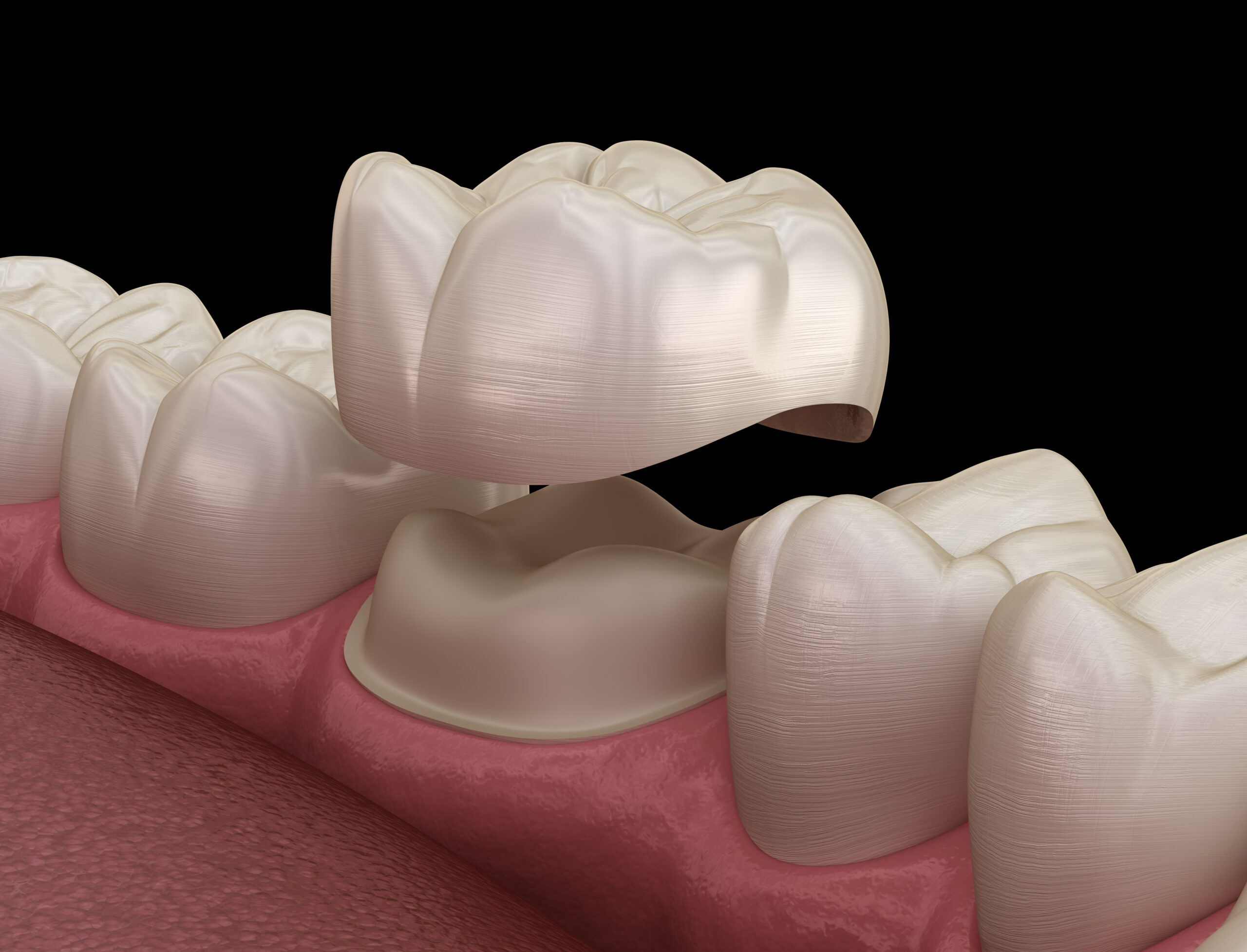
A tooth can look fairly normal from the outside and still be weakened by decay, a large filling, a crack, or previous dental treatment. When a tooth needs more support than a filling alone can provide, a dental crown may be considered. Flash Dental includes crowns among its cosmetic dentistry services in Edmond, OK, giving patients an option for restoring damaged teeth while also considering the appearance of their smile.
Dental crowns are used for several reasons, and they are not limited to cosmetic treatment. A crown may help rebuild a tooth that has lost significant structure, protect a tooth after certain procedures, or improve the shape and appearance of a damaged tooth. Understanding why crowns are recommended can make it easier to evaluate whether one may be appropriate for your situation.
What Is a Dental Crown?
A dental crown is a restoration designed to cover the visible portion of a tooth. It surrounds the tooth above the gum line and helps recreate its shape, size, and chewing surface.
Crowns can be made from different dental materials. The material chosen may depend on the tooth’s location, appearance, bite forces, existing dental work, and other factors.
Unlike a filling, which repairs a selected portion of a tooth, a crown covers much more of the remaining tooth structure. Therefore, crowns are commonly considered when a tooth has been weakened beyond what a smaller restoration can predictably support.
Why Would a Tooth Need a Crown?
A crown may be recommended when a tooth has sustained substantial structural damage. For example, a large cavity may leave too little strong tooth structure to support a conventional filling.
A cracked tooth may also need additional protection. Depending on the location and depth of the crack, a crown may help hold remaining portions of the tooth together and distribute chewing forces more evenly.
Teeth with very large existing fillings can sometimes become weakened over time. If much of the natural structure has already been replaced by filling material, a crown may provide a more comprehensive restoration.
In addition, crowns are commonly used after certain root canal treatments, especially on teeth that experience significant chewing pressure.
What Are Common Signs That a Tooth May Need a Crown?
You cannot always determine whether you need a crown based on symptoms alone. However, several situations may prompt your dentist to evaluate whether a crown would be appropriate.
- A tooth has a very large cavity
- A significant portion of the tooth has broken away
- An old filling occupies much of the remaining tooth
- A tooth has developed a crack
- A tooth has undergone root canal treatment
- A tooth has substantial wear or structural damage
- The shape of a tooth needs significant restorative improvement
- A tooth needs to function as part of a dental bridge
However, not every tooth with one of these conditions automatically needs a crown. Your dentist will consider how much healthy structure remains and whether another restoration could predictably meet the tooth’s needs.
Why Are Crowns Often Used After Root Canal Treatment?
Root canal treatment addresses the tissue inside a tooth. However, the tooth may also have significant decay, an existing restoration, or other structural damage that needs to be addressed afterward.
Flash Dental provides root canal treatment in Edmond, and a crown may be recommended afterward depending on the tooth and the amount of healthy structure that remains.
The goal of the crown is different from the goal of the root canal. Root canal treatment cleans and seals the internal space, while the crown rebuilds and protects the visible chewing portion of the tooth.
Therefore, completing the final restoration is an important part of the overall treatment plan when a crown is recommended.
What Happens During Dental Crown Treatment?
The crown process begins with an examination of the tooth. Your dentist will assess how much tooth structure remains, check the surrounding gums, evaluate the bite, and review any imaging that may be needed.
The tooth is then prepared so the crown can fit over it properly. This generally involves reshaping the tooth to create the space and form needed for the restoration.
Records of the prepared tooth and surrounding bite are then used to create the crown. Depending on the treatment process, a temporary restoration may be used while the final crown is being completed.
Once the final crown is ready, your dentist checks its fit, contact with neighboring teeth, appearance, and bite before securing it in place.
What Does a Temporary Crown Do?
A temporary crown protects the prepared tooth while the final restoration is being made. Although it is designed to function during this period, temporary material is not intended to have the same long-term durability as the final crown.
Patients should follow instructions about eating and cleaning around the temporary restoration. Extremely sticky or hard foods may increase the chance that a temporary crown loosens or breaks.
If the temporary crown comes off, contact the dental office rather than leaving the prepared tooth uncovered for an extended period.
Benefits of Dental Crowns
Dental crowns can provide both structural and aesthetic advantages when a tooth requires more comprehensive restoration than a small filling can offer.
- Protection for weakened teeth: A crown surrounds the remaining visible structure and helps support a tooth that has been significantly damaged.
- Restoration after major decay: Crowns can rebuild teeth that have lost substantial structure.
- Support after root canal treatment: A crown may help restore the strength and function of certain root canal treated teeth.
- Repair of broken teeth: Crowns can recreate missing portions of a tooth when enough healthy structure remains for restoration.
- Improved chewing surface: The restoration can rebuild the shape needed for more effective biting and chewing.
- Natural-looking appearance: Tooth-colored crown materials can be designed to coordinate with surrounding teeth.
- Versatile restorative use: Crowns can be used independently or incorporated into other treatments such as dental bridges.
Dental Crown vs. Filling: What Is the Difference?
A filling replaces a smaller area of damaged tooth structure. The dentist removes decay or damaged material and fills the resulting space.
A crown, meanwhile, covers the tooth much more extensively. Therefore, it may be recommended when the remaining tooth is not strong enough to predictably support another large filling.
The decision is not simply based on the size of the cavity. The location of the damage, thickness of remaining tooth walls, bite forces, and history of the tooth also matter.
Your dentist can explain why a filling is sufficient in one case while a crown may be more appropriate in another.
Dental Crown vs. Veneer: How Are They Different?
Crowns and veneers can both change the visible appearance of teeth, but they are designed for different purposes.
A veneer generally covers the visible front surface of a tooth and is often used for cosmetic changes. A crown surrounds much more of the tooth and may be recommended when structural protection is an important part of treatment.
For example, a healthy tooth with a cosmetic shape concern may not require a full crown. On the other hand, a heavily damaged tooth may need the broader coverage a crown provides.
Because Flash Dental provides several cosmetic dentistry options, patients can discuss which approach better fits the condition of the tooth and the desired result.
How Long Do Dental Crowns Last?
There is no exact lifespan for every dental crown. Longevity depends on the material, location, bite forces, oral hygiene, habits, and condition of the supporting tooth.
A crown on a patient who grinds heavily may experience different forces from the same restoration on someone who does not clench or grind.
Decay can also develop in natural tooth structure near the edge of a crown. Therefore, brushing and cleaning between teeth remain essential even though the crown itself cannot develop a cavity like natural enamel.
Regular examinations allow your dentist to evaluate the crown margins, bite, surrounding gums, and supporting tooth over time.
Can a Crown Get a Cavity Underneath It?
The crown material itself does not decay, but the natural tooth supporting it can still develop decay. This is why cleaning carefully around the gum line and between teeth remains important.
If decay develops around the edge of a crown, treatment may become more complicated depending on how far the problem has progressed.
Therefore, having a crown does not eliminate the need for preventive dental care. Continue routine brushing, interdental cleaning, and professional examinations.
What If a Dental Crown Feels Too High?
When you bite down, a new crown should fit comfortably with the rest of your teeth. Occasionally, a patient may notice that a new restoration seems to contact before the surrounding teeth do.
If your bite feels uneven or the tooth becomes increasingly sore when chewing, contact the dental office. A bite adjustment may sometimes be needed.
Do not assume that significant discomfort will always disappear on its own. An evaluation can determine whether the crown or surrounding tooth needs attention.
Can a Dental Crown Improve the Appearance of a Tooth?
Yes. A crown can restore the shape of a damaged tooth while also improving its visible appearance.
Tooth color, proportions, contour, and alignment with neighboring teeth can all be considered when designing the restoration.
However, crowns should not be used unnecessarily on healthy teeth simply because another cosmetic option was not discussed. Dental bonding, Invisalign, or teeth whitening may be more conservative options depending on the concern.
A cosmetic consultation can help determine which treatment achieves the desired change while preserving appropriate healthy tooth structure.
How Should You Care for a Dental Crown?
Brush the crowned tooth as part of your normal oral hygiene routine and clean carefully between it and neighboring teeth.
In addition, avoid habits such as chewing ice, biting hard objects, or using your teeth to open packaging. These behaviors can damage natural teeth and restorations.
If you grind your teeth, ask your dentist whether additional protection may be appropriate.
Finally, schedule a dental visit if the crown becomes loose, cracked, painful, or noticeably different when you bite.
Frequently Asked Questions About Dental Crowns
Does getting a dental crown hurt?
The tooth is typically numbed during preparation. Patients may notice temporary sensitivity afterward, but significant or persistent discomfort should be discussed with the dentist.
Do I always need a crown after a root canal?
Not every tooth has the same restorative requirements. However, crowns are commonly recommended for certain root canal treated teeth, particularly when significant structure has been lost or the tooth experiences heavy chewing forces.
Can a dental crown fall off?
A crown can occasionally become loose or dislodged. If that happens, contact your dentist rather than attempting a permanent repair at home.
Can a crown match my natural teeth?
Tooth-colored crown materials can be selected and shaped to coordinate with surrounding teeth. The final appearance depends on the material, location, and individual treatment plan.
Restore and Protect a Weakened Tooth
A dental crown can be an important part of rebuilding a tooth that has been weakened by decay, fracture, a large filling, or previous treatment. The best way to determine whether a crown is necessary is through an examination that considers both the health and structure of the tooth.
If you would like to learn whether a dental crown in Edmond, OK may be appropriate for you, contact Flash Dental or call (405) 562-5326 to Book an Appointment. Flash Dental is located at 125 E 3rd St Ste B, Edmond, OK 73034.