When a tooth is missing, the open space can affect more than the appearance of your smile. Depending on the tooth’s location, the gap may influence chewing, nearby tooth positions, and the way your bite functions. One restorative option patients may consider is a dental bridge. Flash Dental includes crowns and bridges among its cosmetic dentistry services in Edmond, OK, providing another way to address selected cases of tooth loss.
A dental bridge is different from a removable denture and also different from a dental implant. It uses a fixed restoration to replace one or more missing teeth by spanning the space between supporting teeth or restorations. Understanding how bridges work, how they are maintained, and how they compare with other options can help you make a more informed tooth replacement decision.
What Is a Dental Bridge?
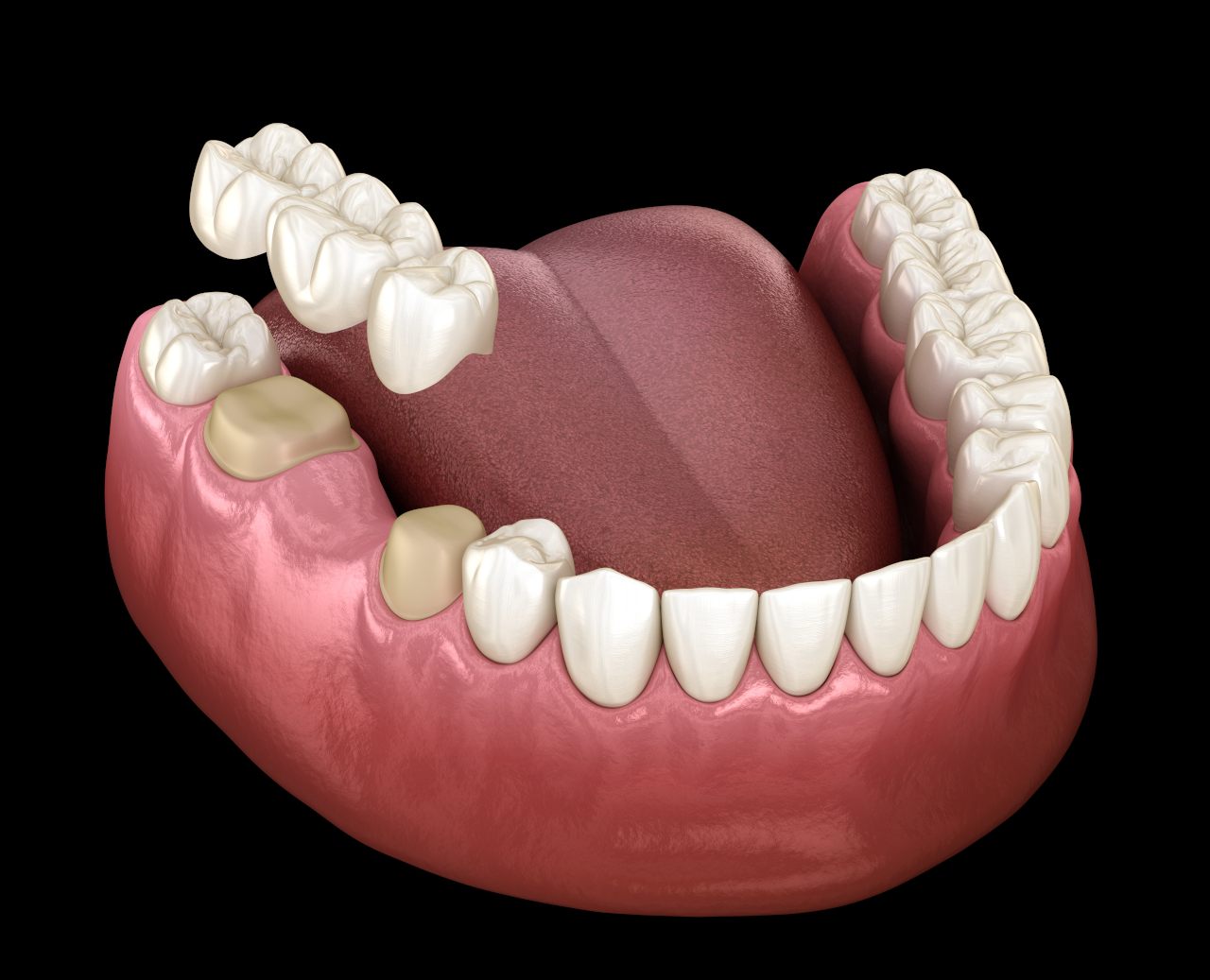
A dental bridge is a fixed restoration designed to replace a missing tooth or selected group of missing teeth. As the name suggests, the restoration bridges the space where teeth are absent.
A traditional bridge commonly uses crowns placed on supporting teeth on either side of the missing tooth. An artificial replacement tooth is connected between those crowns, creating one restoration that fills the space.
Because the bridge is fixed in place, patients do not remove it each day for cleaning in the way they would remove a traditional partial denture. However, special attention is needed when cleaning beneath the replacement tooth.
Why Replace a Missing Tooth?
Some patients wonder whether replacement is necessary when the missing tooth is located toward the back of the mouth and is not easily visible.
The answer depends on the location of the tooth, the bite, remaining teeth, and overall oral health. However, missing teeth can affect chewing and may allow nearby teeth to change position over time.
A missing tooth can also influence how biting forces are distributed. When one area no longer contributes normally, other teeth may take on additional work.
For visible teeth, appearance and speech may also be important considerations.
Therefore, even when the space does not bother you cosmetically, it is worth asking your dentist whether replacement is recommended.
How Does a Traditional Dental Bridge Work?
A traditional bridge generally relies on teeth adjacent to the missing space for support. These teeth are prepared for crowns, and the replacement tooth between them becomes part of the same connected restoration.
This design allows chewing forces to be transferred through the supporting teeth. As a result, those teeth need to be healthy enough to support the restoration.
Your dentist will examine the potential supporting teeth, gums, bite, and surrounding structures before recommending a bridge.
If the neighboring teeth are not healthy enough for crowns or if another treatment would better fit the situation, a different tooth replacement option may be recommended.
Who May Be a Candidate for a Dental Bridge?
A dental bridge may be considered when one or more teeth are missing and appropriate support is available around the space.
The health of neighboring teeth matters because traditional bridges depend on those teeth for stability. Gum health is also important because the supporting teeth need healthy surrounding tissues.
In addition, your dentist will evaluate the size of the missing space, bite forces, and location of the teeth involved.
A patient with one missing tooth between two strong teeth may have very different options from someone missing several teeth at the end of the dental arch.
What Happens During Dental Bridge Treatment?
Treatment begins with a dental examination and discussion of your tooth replacement options. Your dentist will evaluate the missing area and determine whether a bridge is appropriate.
If a traditional bridge is selected, the supporting teeth are prepared to receive crowns. Records are then taken so the restoration can be created to fit the space and bite.
A temporary restoration may be used while the final bridge is being completed. During this period, follow your dentist’s instructions for eating and cleaning.
When the final bridge is ready, the dentist evaluates its fit, bite, appearance, and contact with neighboring teeth. After necessary adjustments are made, the bridge can be secured in place.
Benefits of Dental Bridges
Dental bridges can provide an effective fixed tooth replacement option for appropriately selected patients. Several characteristics make them useful in restorative dentistry.
- Replacement of missing teeth: A bridge fills an open space with a fixed dental restoration.
- Improved chewing function: Replacing a missing tooth can restore an additional chewing surface.
- Fixed design: Traditional bridges remain in the mouth rather than being removed daily like conventional partial dentures.
- Natural-looking appearance: Tooth-colored materials can be used to create replacement teeth that coordinate with the surrounding smile.
- Restoration of visible spaces: Bridges can replace teeth in areas where tooth loss affects smile appearance.
- Support for bite function: Replacing a missing tooth may help distribute chewing forces more effectively.
- Established restorative option: Dental bridges have long been used to replace selected missing teeth when appropriate supporting teeth are available.
Dental Bridge vs. Dental Implant: What Is the Difference?
Dental bridges and dental implants can both replace missing teeth, but they use very different forms of support.
A traditional bridge relies on neighboring teeth. Those teeth are prepared for crowns that support the replacement tooth between them.
A dental implant, meanwhile, is placed in the jaw and functions as an artificial root that can support a restoration. Therefore, an implant generally does not require crowns to be placed on neighboring teeth solely for the purpose of supporting the replacement.
Flash Dental provides dental implants in Edmond, so patients with missing teeth can discuss both approaches where appropriate.
The better option depends on available bone, health of nearby teeth, treatment time, surgical considerations, cost, maintenance preferences, and the patient’s overall dental condition.
Dental Bridge vs. Partial Denture: How Are They Different?
A traditional bridge is fixed in place, while a conventional partial denture is removable. This difference affects cleaning, comfort, treatment planning, and how each restoration receives support.
A partial denture may replace several teeth in different areas of the same arch, while a bridge generally replaces a specific continuous space.
Flash Dental also provides partial dentures in Edmond. Therefore, patients with multiple missing teeth may have more than one restorative option to consider.
The number and location of missing teeth are important factors when comparing these treatments.
Do Teeth Have to Be Prepared for a Bridge?
For a traditional dental bridge, supporting teeth generally need to be prepared for crowns. This involves reshaping those teeth so the crowns can fit over them.
This is an important distinction when comparing a bridge with a dental implant. If neighboring teeth are completely healthy and untouched, preserving their natural structure may influence the discussion of tooth replacement options.
On the other hand, if neighboring teeth already need crowns because of large fillings or structural damage, incorporating them into a bridge may sometimes fit naturally into the overall restorative plan.
Your dentist can explain how much preparation would be needed in your specific case.
How Do You Clean Under a Dental Bridge?
Cleaning beneath a bridge is one of the most important parts of maintaining the restoration. Because the replacement tooth is connected to the supporting crowns, ordinary floss cannot simply pass down through the contact point from above.
Instead, patients may use floss threaders, specialized interdental cleaners, water flossing devices, or other tools recommended by their dental team.
The goal is to remove plaque and food debris from beneath the replacement tooth and around the supporting teeth.
This is especially important because the natural teeth supporting the bridge can still develop decay and gum problems.
Can a Tooth Supporting a Bridge Get a Cavity?
Yes. A crown protects part of the supporting tooth, but natural tooth structure remains underneath and near the crown edges.
If plaque accumulates around those areas, decay may develop. Therefore, brushing and careful interdental cleaning remain important even though the visible surfaces are covered by the restoration.
Regular dental visits also allow your dentist to examine the margins of the bridge and monitor the supporting teeth.
How Long Can a Dental Bridge Last?
There is no exact lifespan that applies to every bridge. Longevity depends on the condition of the supporting teeth, oral hygiene, bite forces, restoration materials, habits, and overall health of the mouth.
A bridge may need attention if one of the supporting teeth develops decay, the restoration becomes loose, the material chips, or the bite changes.
Therefore, long-term success depends on caring for both the bridge and the natural teeth that support it.
What Happens If a Dental Bridge Feels Loose?
A bridge should feel stable. If you notice movement, a change in the way your teeth come together, discomfort around a supporting tooth, or an unusual taste near the restoration, schedule an evaluation.
Do not try to permanently secure a loose bridge using household adhesive. Products that are not designed for dental use can damage tissues and make professional treatment more difficult.
Your dentist needs to determine why the bridge became loose. The problem may involve the cement, supporting tooth, decay, a fracture, or another issue.
Can a Bridge Replace More Than One Missing Tooth?
In certain situations, a bridge can replace more than one missing tooth. However, the longer the space becomes, the more important support and bite forces become.
Not every large missing area can be predictably restored with a traditional bridge. A patient missing several teeth may instead be better suited for implants, a partial denture, or another restorative plan.
Therefore, the number of replacement teeth should be determined through an individualized evaluation rather than assuming that a bridge can span any size gap.
Can Dental Bridges Look Natural?
A well-designed tooth-colored bridge can be created with attention to tooth shape, color, proportions, and alignment with surrounding teeth.
For front teeth, appearance may be an especially important part of treatment planning. For back teeth, function and resistance to chewing forces may receive additional emphasis.
Your dentist will consider both appearance and function because a successful restoration needs to work comfortably as well as blend with your smile.
Should You Replace a Tooth Immediately After Extraction?
The timing of replacement depends on why the tooth was removed, the health of the site, and which restoration is planned.
Some patients may begin planning a bridge before the extraction occurs, while others may need healing time before a final restoration is completed.
If you know that a tooth may require extraction, discuss replacement options before treatment whenever possible. Understanding the complete plan can make the transition easier.
Frequently Asked Questions About Dental Bridges
Is a dental bridge removable?
A traditional dental bridge is fixed in place and is not removed each day by the patient. Removable partial dentures are a different type of tooth replacement.
How many teeth can a bridge replace?
The number varies according to the size and location of the missing space, strength of supporting teeth, and bite forces. A dentist needs to evaluate whether a bridge can predictably span the area.
Does food get under a dental bridge?
Food and plaque can collect beneath the replacement portion of a bridge, which is why specialized cleaning techniques are important.
Is a bridge better than an implant?
Neither option is automatically better for every patient. The best treatment depends on neighboring teeth, available bone, health history, treatment preferences, and other individual factors.
Choose a Tooth Replacement Plan That Fits Your Smile
A missing tooth does not have only one solution. Dental bridges, implants, and removable restorations each approach tooth replacement differently. Understanding how these options work allows you to compare treatment time, maintenance, support, function, and long-term goals with your dentist.
If you are considering a dental bridge in Edmond, OK, contact Flash Dental or call (405) 562-5326 to Schedule a Consultation. Flash Dental is located at 125 E 3rd St Ste B, Edmond, OK 73034, and the team can help you explore the tooth replacement options appropriate for your smile.